Dreadnought Submarines: Future of UK’s Nuclear Deterrent
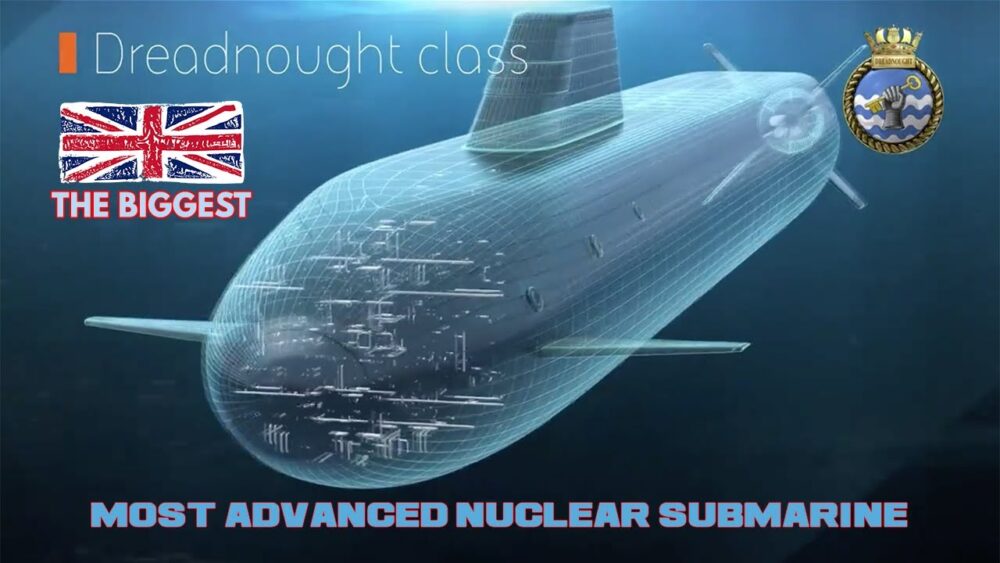
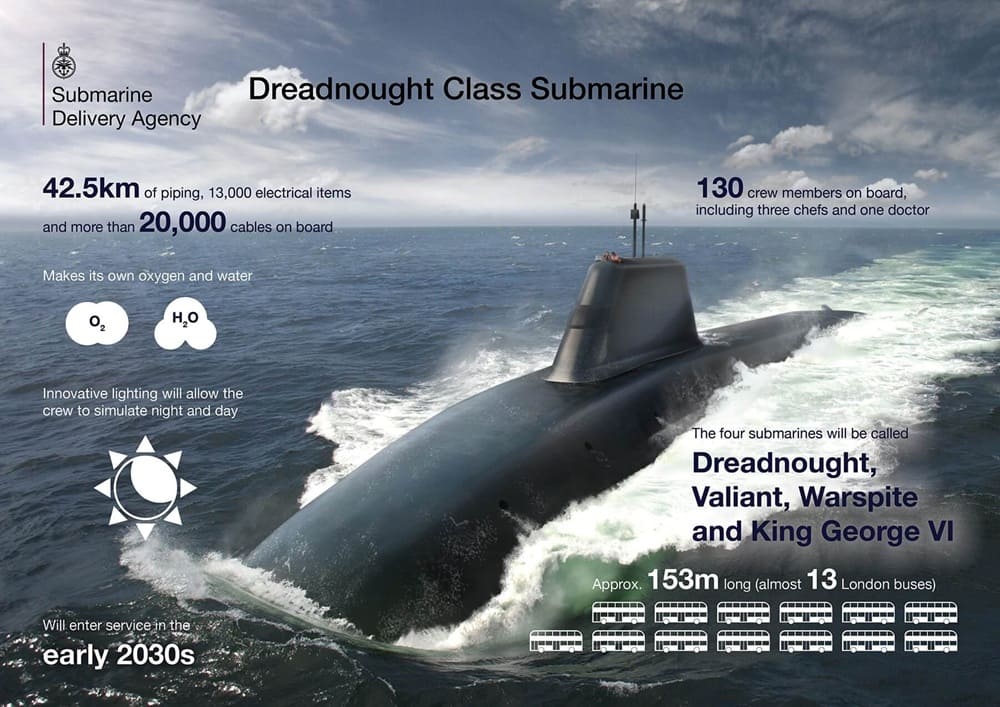
The Royal Navy’s next-generation Dreadnought-class submarines will be a major upgrade to the UK’s maritime defense posture. These vessels are to replace the ageing Vanguard class to maintain Britain’s at-sea nuclear deterrent. We now know that Dreadnought has had several changes made to its design to improve stealth, agility, and operational efficiency.
Improved Bow Design
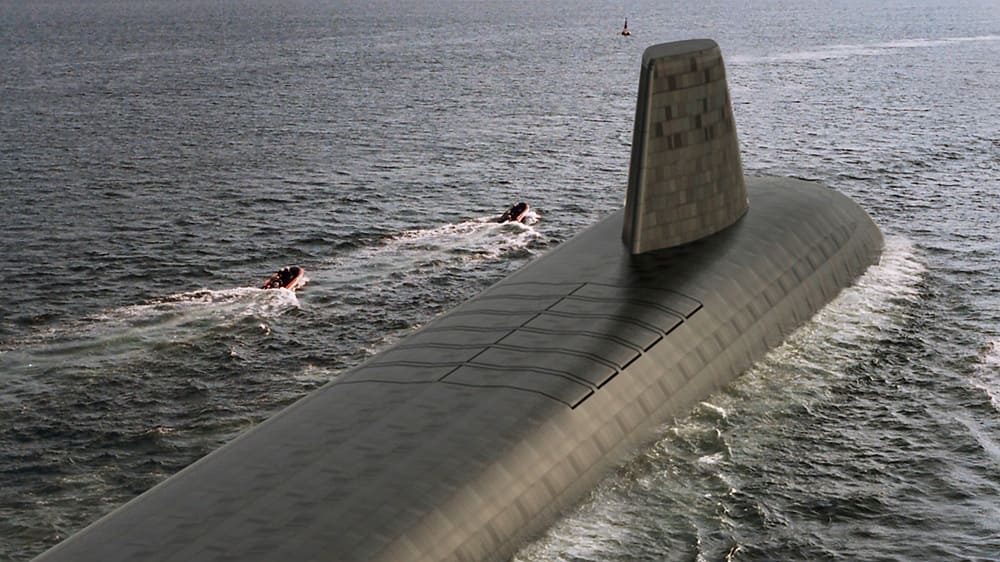
A scale model shown at the UK House of Commons during Rolls-Royce’s “Nuclear Week in Parliament” has provided a clearer look at the Dreadnought’s design. One of the most significant changes is the position of the horizontal stabilisers on the bow.
Dreadnought mounts its stabilisers on the sail rather than the hull, while its bow planes improve control and manoeuvrability. We expect this change to improve depth stability, especially during low-speed operations and the launching of ballistic missiles.
Hull & Propulsion Upgrades
The Dreadnought has an elliptical bow, which is a specialised front shape that allows water to flow smoothly around the hull. This design is quieter and more stealthy, allowing the submarine to operate quietly during missions and avoid detection.
The Dreadnought also has a pumpjet propulsion system. This system makes the submarine even quieter. It is one of the factors that help the Dreadnought remain stealthy.
The Dreadnought has an X-shaped stern arrangement. This arrangement is different from submarines. It helps the Dreadnought to move around and control how deep it goes in the water. The Dreadnought is really proficient at manoeuvring, thanks to its X-shaped stern arrangement.
Armament & Strategy
Dreadnought carries Trident II D5 ballistic missiles, the UK’s core nuclear deterrent, through twelve vertical launch tubes. The submarine also carries four 533mm torpedo tubes for Spearfish torpedoes, giving it a powerful defense against surface and sub-surface threats.
Crew Accommodation & Longevity
The Dreadnought is made for trips, and it has better living conditions for the Dreadnought crew. The nuclear submarine has things like medical facilities, special rooms for female personnel, places to train, and new areas to work out.
The Dreadnought has a lighting system that simulates day and night, helping the crew adjust when they are underwater for extended periods. A PWR3 nuclear reactor powers the new submarine, enabling Dreadnought to remain underwater for long periods without refuelling and operate for more than 35 years.
Legacy and Future
The name Dreadnought has a lot of history behind it. It reminds us of the battleship Dreadnought from 1906. This ship changed the way navies fought at sea. The new Dreadnought-class submarines are just as important. They have the technology and modern designs. This capability allows them to do what they need for defense today.
The Dreadnought-class submarines are better at staying safe and getting the job done. They are also better at fighting against submarines. Dreadnought-class submarines will help keep the UK safe at sea for a time. They will give the UK an advantage over countries for decades to come.
References
- https://www.niauk.org/wp-content/uploads/2025/12/nwip26_agenda_251117_4.pdf
- https://www.royalnavy.mod.uk/equipment/submarine/dreadnought-class
- https://www.britannica.com/topic/Dreadnought-British-battleship
- https://www.rolls-royce.com/products-and-services/defence/submarines/naval-nuclear-propulsion-plant.aspx
- https://www.twz.com/sea/our-best-look-yet-at-britains-new-dreadnought-class-ballistic-missile-submarine-design
About the Author