
Europe’s Military Output for Ukraine Overtakes U.S.
A New Balance in Defence Production
For the first time since Russia’s full-scale invasion in 2022, European military output for Ukraine has surpassed that of the United States. Fresh data from the German Kiel Institute for the World Economy reveals that between February 2022 and June 2025, European nations generated at least €35.1 billion ($41.1 billion) worth of military-industrial production for Ukraine—€4.4 billion ($5.15 billion) more than the U.S. committed over the same period.
Shifting Aid Patterns After U.S. Policy Changes
This shift comes amid a notable reorientation in transatlantic aid patterns. In spring 2025, Europe also overtook the U.S. in total military aid, driven by a surge in European commitments after Washington scaled back support under the incoming Trump administration.

According to EU data, member states have allocated over $65 billion in military assistance, with additional contributions from non-EU European allies pushing totals even higher. The latest American weapons packages, recently approved by President Donald Trump, are excluded from Kiel’s tally because Kyiv will purchase—not receive—these systems as direct donations.
A Wider Gap in Overall Support
When factoring in all forms of aid, Europe’s lead is even more pronounced. The Kiel Institute reports that European governments have allocated €167.4 billion ($196.1 billion) in governmental aid to Kyiv and pledged another €90 billion ($105.4 billion). In contrast, the U.S. has allocated and pledged €114.6 billion ($134.3 billion) and €4.35 billion ($5.1 billion), respectively.
Europe’s Collective Weight in Defence Contributions
Despite this, the U.S. remains the largest single donor nation, contributing nearly twice as much as the second-largest—the European Union. Brussels alone has delivered €60.5 billion ($70.9 billion) in financial support and €2.7 billion ($3.2 billion) in humanitarian relief.
The U.S. still leads in individual categories, such as infantry fighting vehicles, howitzers, rocket artillery, and advanced air defense systems. Yet, when combined, European deliveries surpass American totals in each of these sectors, underlining the collective industrial strength of the continent.
Leading European Donors
Germany stands as Europe’s largest single donor, but relative to GDP, Denmark, Estonia, Lithuania, and Latvia take the lead. Denmark’s support equals 2.9% of GDP, rising to 3.3% when factoring in EU-level aid.
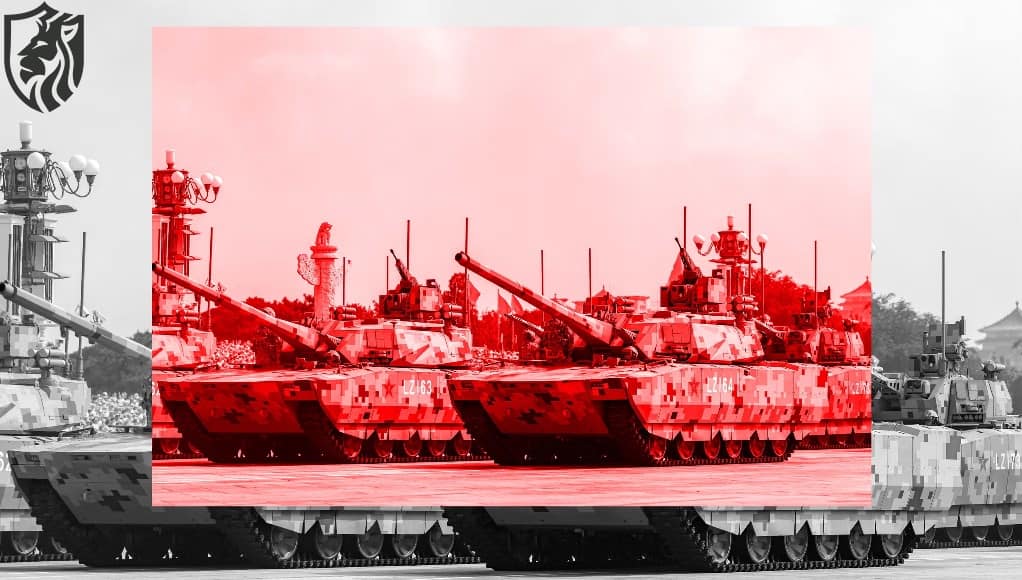
Poland has been especially prominent in armored warfare support, becoming Ukraine’s top tank supplier, with 354 tanks delivered. The Netherlands contributed 104, and Denmark sent 94, strengthening Ukraine’s mechanized brigades.
From Stockpiles to Industrial Production
Kiel researchers highlight that today’s weapons shipments increasingly come directly from defense industry output, unlike in the war’s early phases, when much of it came from existing stockpiles.
Early on, the rushing of urgently needed systems to Ukraine’s frontlines depleted many Western arsenals. The European defense industry has scaled up, providing new equipment rather than relying on surplus inventories.

Consistency Versus Uncertainty
A key difference lies in reliability. While U.S. support has fluctuated with domestic political shifts, European aid has remained steady and even expanded into the war’s fourth year.
In May and June 2025 alone, European governments allocated €10.5 billion ($12.3 billion) in new military support. Notably, at least €4.6 billion ($5.4 billion) of this funding came through procurement contracts, underscoring the growing centrality of industrial output over old stockpiles.
Strategic Implications
The rise of European military output for Ukraine reflects a deeper strategic shift. European defense industries are sustaining Kyiv’s war effort and building long-term capacity to deter future aggression. For the U.S., the development signals that Washington’s role as the primary arsenal for Ukraine is no longer unchallenged. For Europe, it’s a sign of industrial resilience and strategic autonomy—capabilities that are likely to shape the continent’s defense posture for years.
References
- https://www.ifw-kiel.de
- https://www.consilium.europa.eu
- https://www.nato.int
- https://www.defensenewstoday.info
About the Author