
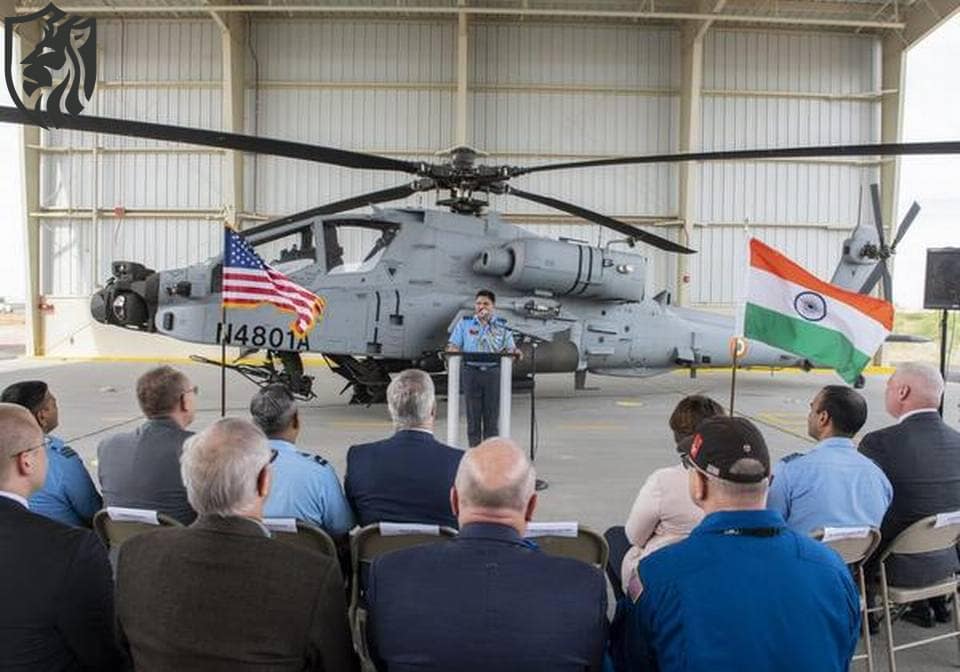
Indian AH-64E Apache
India Puts Its Money on Apache Helicopters Even while other countries, including South Korea, are pulling away, India is sticking with the AH-64E Apache.
The Indian Army inked a $600 million purchase for six Apache helicopters in 2020. They are finally expecting their first deliveries this month.
The arrival was pushed back from mid-2024 because of problems with the supply chain. Still, the Indian military is hopeful as it grows its fleet of helicopters and rotary-winged aircraft.
India is betting on Apache helicopters, but military tactics around the world are moving towards cheaper, unmanned systems. India’s commitment appears to be more strategic than tactical as its ties with the US grow stronger.
South Korea’s U-Turn: From Apaches to Self-Driving Platforms
India is betting on Apache helicopters, but South Korea is thinking about how to invest in the future. Seoul had first planned to buy 36 more AH-64Es. But worries about how well helicopters can survive in recent wars have changed that. Reports suggest that Seoul may scale back the purchase or even cancel it entirely.
Instead, South Korea is putting a lot of money into unmanned aerial vehicles and its Light Armed Helicopter (LAH). The logic behind buying things changes as dangers on the battlefield change. Drones are more flexible and less risky, especially in airspace where Apaches would have trouble.
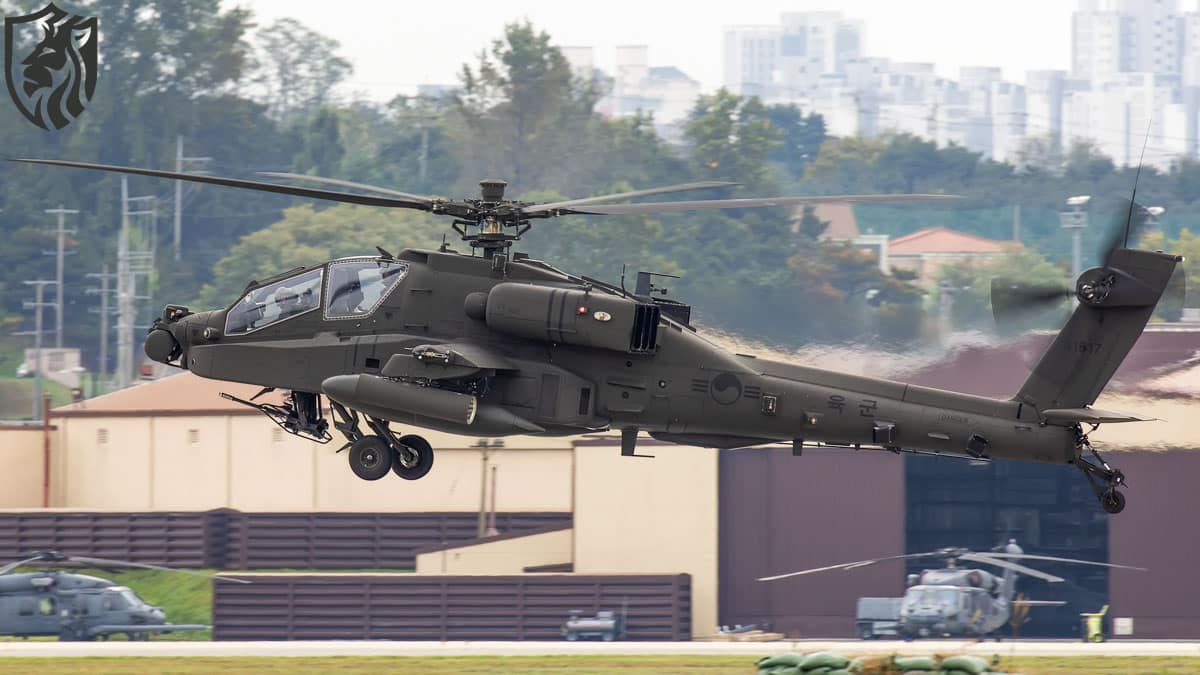
What Ukraine Taught Us: The Apache’s Weakness Exposed data from the battlefield in Ukraine has changed how people around the world see things. Many people point out that Apache helicopters are becoming more vulnerable as India bets on them. Modern air defense systems, like MANPADS and SHORAD, may easily hit helicopters that are flying low.
The Apache’s low-level tactics used to work all the time, but not anymore. Cheap, portable drones and loitering weapons can still be dangerous to even the most modern AH-64Es. These technologies can find and hit helicopters in the air and on the ground with scary accuracy.
The battle in Ukraine has demonstrated the ability to destroy classic gunships, making it imperative for smarter systems to achieve air superiority.
The increasing costs and maintenance burdens are a cause for concern.
Even though India is betting on Apache helicopters, some people are worried about the cost-benefit balance. The price per unit has gone up by 160% in ten years. Furthermore, it takes about 35 hours of work to keep an Apache flying for every hour it flies. That costs almost $5,500 for every hour of flight time.
The US has begun to cut back on the number of Apaches it has. It is getting rid of older AH-64D models and wondering if even the newest AH-64Es are worth the exorbitant price. This trend represents a significant shift for countries that closely monitor their defense budgets.
More advanced features For now, keep Apaches important.
But the Apache does have some positive points. It still has a lot of firepower. A 30mm chain gun, 70mm rockets, and precision-guided Hellfire missiles are aboard each helicopter. It has a sensor suite on its nose that helps identify, follow, and attack targets in difficult terrain.
The AH-64E is most famous for supporting MUM-T (Piloted-Unmanned Teaming). This lets crew members fly UAVs on missions, which gives them a wider view and range. This feature may make the investment worth it for India. India bets on Apache helicopters in part because of this unique way of combining people and machines.
Can Apaches deliver in China and high-altitude warfare?
India is betting on Apache helicopters, but others are still worried about how well they will work at high altitudes. China’s presence in Ladakh and Arunachal Pradesh requires air assets that can fly higher than 15,000 feet. One famous case involved an Apache helicopter becoming stuck in the Himalayas for months.
People have compared this to India’s own Light Combat Helicopter (LCH) Prachand. The Prachand is made for fighting in the mountains, works well at high altitudes, costs less, and helps local businesses. Some analysts think that it would make more sense to increase LCH production than to buy Apaches.
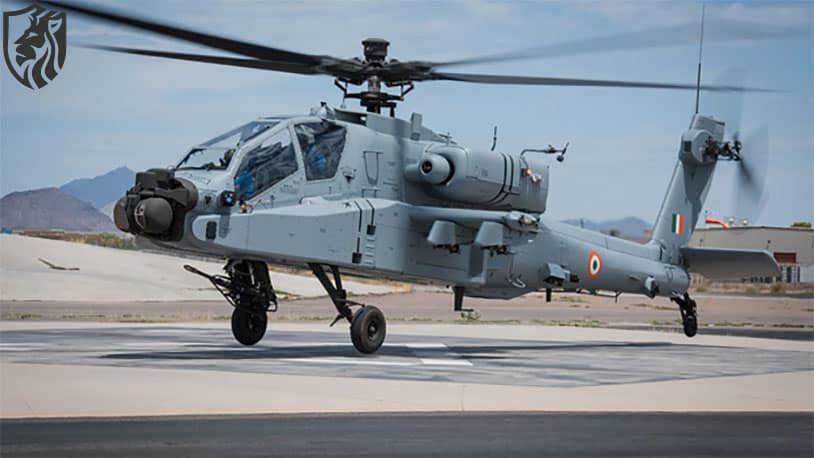
Strategic Alignment with Washington Still Drives Buying
India’s defense decisions aren’t based on battlefield data, even though there are hazards. Pre-planned partnerships play a crucial role. The Apache contract makes Delhi’s defense ties with Washington stronger. This is a change in India’s buying approach, along with recent deals for MQ-9B drones and Stryker vehicles.
The relationship guarantees access to cutting-edge technology, training, and continuous help. Even if detractors refer to the MQ-9’s recent losses in the Middle East, these systems nonetheless represent strategic trust. India is betting on Apache helicopters to improve military and political ties with the US.
Changing battlefields need Changing strategy
Some people say that drones are taking the place of helicopters in duties including reconnaissance, targeting, and strikes. In battle, first-person-view drones and kamikaze UAVs have shown that they work. They cost less, are harder to find, and are easier to replace.
Even the leaders of the US Army have spoken out about their worries. Lt. Gen. Joseph Ryan warned not too long ago that the Apache might not be a “war-winning capability” anymore. It may now be necessary to redesign or replace platforms that were once the best on the battlefield.
Some people still disagree. Anil Chopra, a veteran Air Marshal, says that attack helicopters do a job that nothing else can. They are still useful, at least for now, because of their speed, firepower, and ability to “pop up and shoot.”.
Final Thoughts: Should You Change Your Mind or Stick With It?
India invests in Apache helicopters, but it also has to spend money on drone defense, electronic warfare, and AI-based targeting systems. MUM-T is a step forward in connecting Apaches with drones, but the safety of the Apaches is still a problem.
India’s geography, enemies, and military doctrine influence this choice. The Apache may help against Pakistan’s tank-heavy forces. It’s not as clear what to do against China’s drone swarms and layered air defenses. In the end, India’s bet on the Apache may pay off if it is smartly adapted to new dangers and works well with local platforms like the LCH.
References
- Boeing AH-64 Apache – Official Boeing Overview
🔗 https://www.boeing.com/defense/ah-64-apache/ - India to Get Apache Helicopters From July – Times of India
🔗 https://timesofindia.indiatimes.com/india/army-to-get-apache-attack-helicopters-from-july/articleshow/110415096.cms - South Korea Rethinks Apache Acquisition – The Korea Times
🔗 https://www.koreatimes.co.kr/www/nation/2023/10/205_360067.html - Why Apache Helicopters Are Losing Relevance – EurAsian Times
🔗 https://eurasiantimes.com/south-korea-shelves-apache-helicopters-plan-as-india-awaits/ - US Army Reduces Apache Fleet – Defense News
🔗 https://www.defensenews.com/land/2024/03/18/us-army-makes-sweeping-changes-to-helicopter-fleet/ - Indian Army Forms First Apache Squadron – Hindustan Times
🔗 https://www.hindustantimes.com/india-news/indian-army-forms-its-first-apache-helicopter-squadron-101709820909632.html - MQ-9 Drones Shot Down in Middle East – Al Jazeera
🔗 https://www.aljazeera.com/news/2024/2/28/us-mq-9-drone-downed-by-houthis-over-yemen - India’s LCH Prachand: High Altitude Warrior – The Print
🔗 https://theprint.in/defence/prachand-indias-first-indigenous-light-combat-helicopter/1178228/ - Apache vs Modern Air Defences – Military Watch Magazine
🔗 https://militarywatchmagazine.com/article/ah64-ineffective-modern-warzone - India-US Strategic Defence Ties – The Diplomat
🔗 https://thediplomat.com/2023/12/indias-expanding-defense-ties-with-the-us/
About the Author